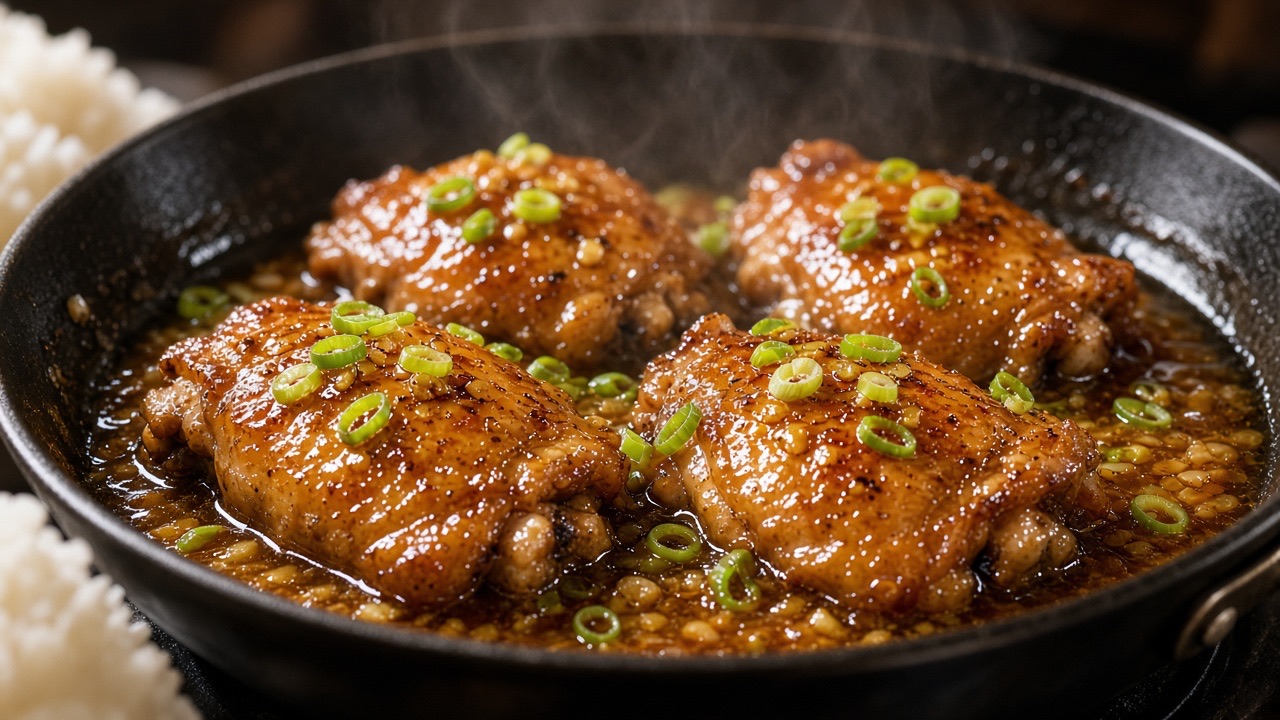
Honey garlic chicken that stays sticky, not burnt
Honey burns once it boils hard. Sear the chicken first, take it out, and build the sauce in the same pan so you keep the browned bits. The sauce itself only needs a minute or two. If it smells sharp and the bubbles turn dark, the heat is too high. Pull the pan off the burner, add a spoon of water, and put it back on low.
80 g of honey is about 4 tablespoons. Honey is much heavier than sugar, so a cup is not a cup. The honey grams-to-cups chart is the one to trust if you are scaling this. More honey makes a sweeter, thicker glaze that burns faster. Do not double it without watching the pan.
The cornstarch
One teaspoon, mixed with cold water before it hits the pan. Dump the powder straight into hot honey and you get lumps. The slurry goes in at the end and simmers until the sauce turns clear and glossy. Out of cornstarch, the cornstarch substitutes page covers flour. Use twice as much flour as cornstarch, and give it an extra minute so the raw flour taste cooks off.
Chicken thighs stay juicy at this timing. Breasts work if you pound them to an even thickness and pull them at 70°C inside. They dry out if they get the same six minutes a thigh wants.
The sauce should coat the meat and leave a trail on the plate. If it is thin, simmer another 30 seconds before the chicken goes back in. If it is a paste, loosen it with a spoon of water. Scallions at the end. They are there for sharpness, and they go dull if they boil.
Serve over rice the night you cook it. The glaze sets in the fridge and needs a splash of water when you reheat it.