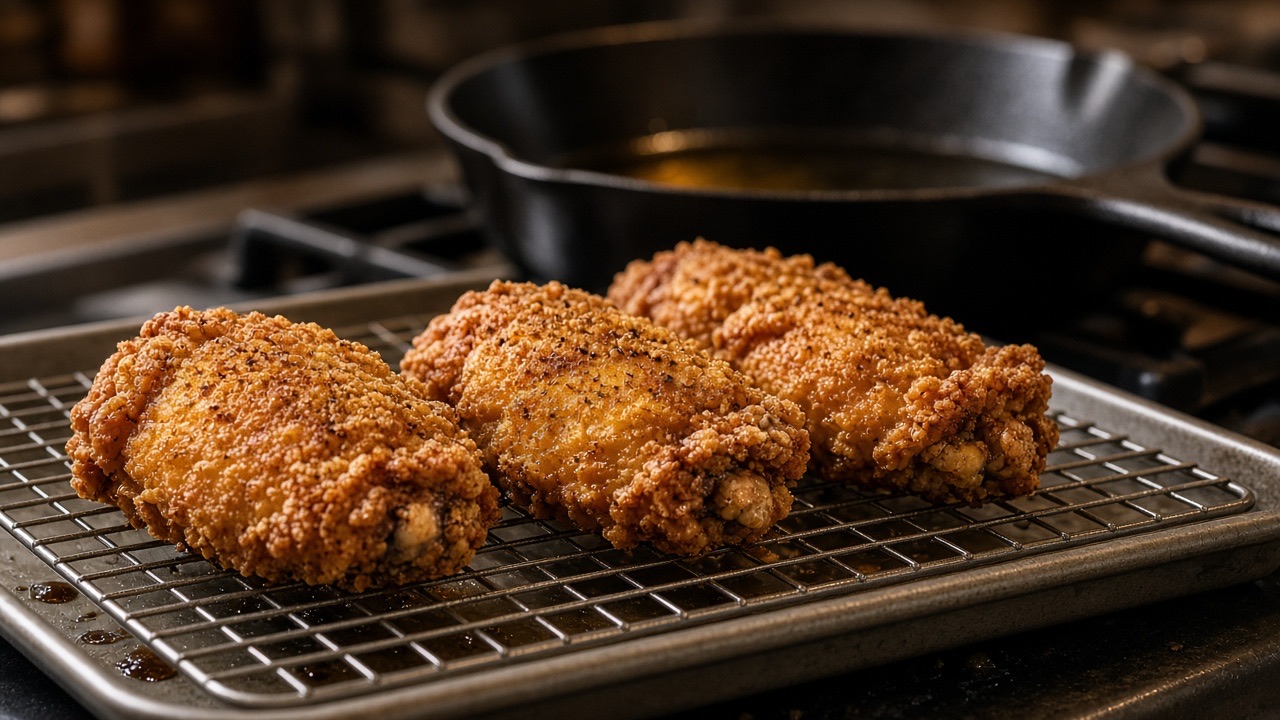
Skillet fried chicken, soaked in buttermilk
You do not need a deep fryer. You need oil that stays near 170°C, thighs instead of breasts, and a coating that has had ten minutes to stick.
490 g of buttermilk is 2 cups. The buttermilk chart is the weight if you are pouring from a carton with cup marks. No buttermilk? The buttermilk substitute, milk plus lemon juice, works for this soak. You want the acid and the thickness so the flour has something to hold. Plain milk makes a coating that slides off.
Cornstarch is the shatter
150 g of all-purpose flour is 1 1/4 cups on the flour chart. The 40 g of cornstarch is what makes the crust crisp instead of bready. 40 g is about 1/3 cup. The cornstarch chart has the rest of the weights. Out of cornstarch? The cornstarch substitute is usually more flour, and the crust will be softer. That is a fair trade on a weeknight. It is not the same crunch.
Salt the buttermilk, not just the flour. The soak is the only seasoning that gets under the skin. Flour salt only flavors the crust.
Temperature, then patience
Oil at 170°C. Below that, the chicken drinks oil and the coating goes blonde and greasy. Above about 185°C, the crust is dark before the bone side is cooked. A clip-on thermometer is the honest tool. Without one, a pinch of flour should bubble straight away and brown in about 40 seconds, not sit there and not smoke.
Four thighs at a time in a 30 cm skillet. Turn once. Prodding and flipping every minute knocks the crust off. 74°C in the thickest meat, not touching the bone, is done. Bone reads hotter and lies.
Rest them on a rack. Paper towels under a pile of hot chicken trap steam, and the crust you just fried goes soft in three minutes. Eat them the day you fry them. Reheated fried chicken is a different, lesser thing. A hot oven at 200°C for 10 minutes is the least-bad way to warm leftovers.