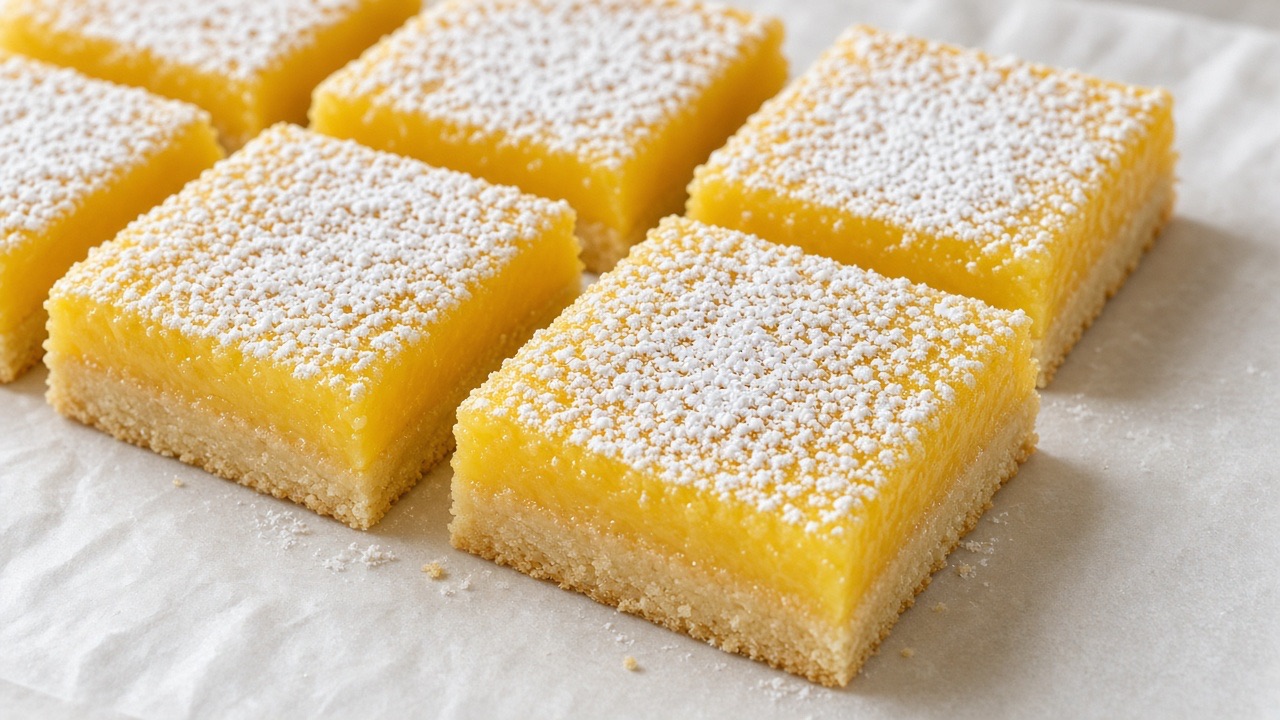
Lemon bars with a crust that is actually baked
The usual failure is a pale, doughy base under a lemon layer that never set. The crust has to bake on its own before the filling goes on. The filling has to see enough heat to thicken, then the bars have to cool before you cut them.
Icing sugar in the crust is what keeps the shortbread tender. 40 g is about 1/3 cup. Icing sugar is light, and a scooped cup is not 40 g. Unsifted icing sugar is about 113 g per cup. The icing sugar chart is the full table. The extra 30 g is only for the dusting at the end. Do not stir that into the curd.
Cold butter, hot crust, then the lemon
113 g of butter is one US stick. Keep it cold. Soft butter makes a crust that fries at the edges and stays raw in the middle. Press the crumbs in with the bottom of a measuring cup so the base is even. A thin patch burns. A thick patch stays doughy. 165 g of the flour is for the crust. That is about 1 1/3 cups on the flour chart.
Bake the crust 18 minutes. It should be pale gold at the rim, not blonde. Pour the filling onto that hot crust. The residual heat starts the curd setting from below.
The remaining 15 g of flour, about 2 tablespoons, is what keeps the lemon layer from weeping after you cut it. Skip it and the bars look set in the pan, then puddle on the plate. 200 g of granulated sugar is 1 cup. The granulated sugar chart matches that. 80 g of lemon juice is about 1/3 cup, roughly two large lemons. Bottled juice works. It tastes flatter, so add the zest either way.
Cut them cold
A center that still ripples like water needs a few more minutes. A center that barely shivers is done. It finishes setting as it cools. Chilling an hour makes clean squares. Dust with icing sugar only when the top is cold. On a warm bar the sugar dissolves and you lose the contrast.
The bars keep 3 days covered in the fridge. The dusting fades in a humid container. Add a fresh pinch of icing sugar before you serve leftovers.