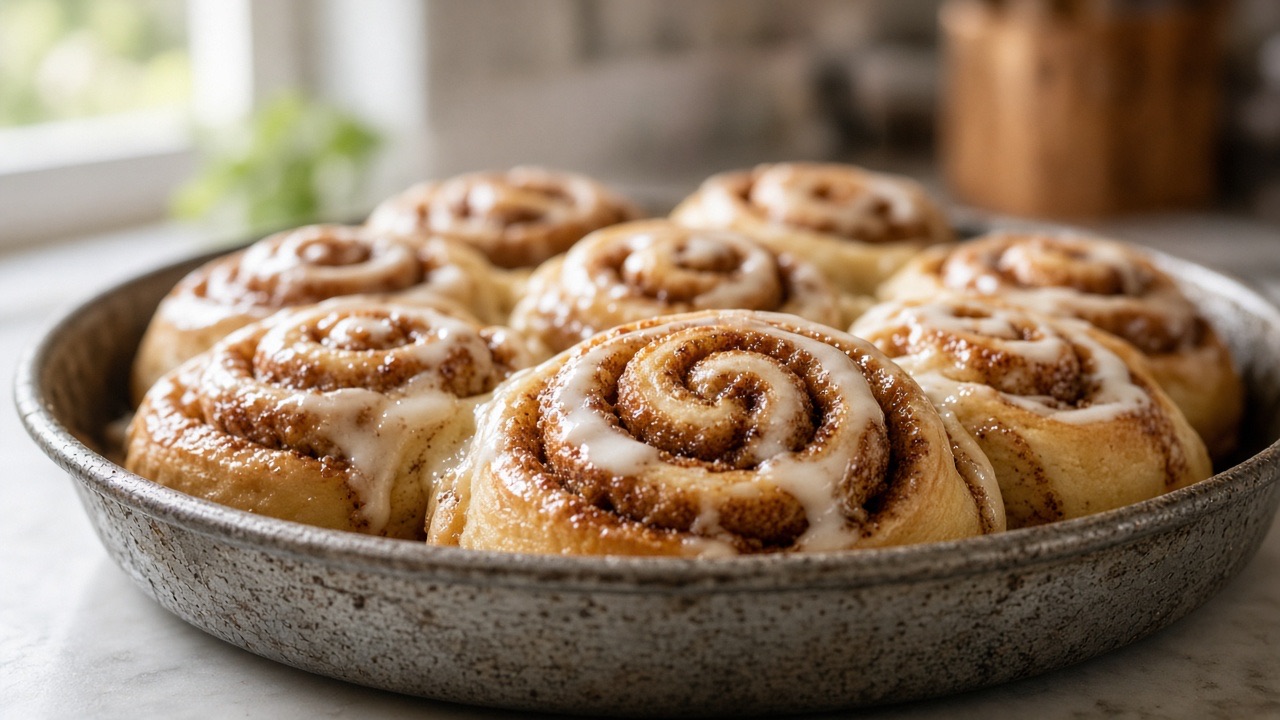
Cinnamon rolls with a buttermilk dough
Buttermilk keeps the crumb soft after the rolls cool. Plain milk works, but the rolls dry out faster on day two. Warm the buttermilk only to about 35°C. Hotter than that and you kill the yeast. It should feel like bath water that has already cooled.
360 g of all-purpose flour is 3 cups when the flour is spooned and leveled. A scooped cup is heavier, and a stiff dough bakes into a tight roll that will not unwind. Use the flour chart if you are converting a cup recipe. 180 g of buttermilk is about 3/4 cup on the buttermilk chart. No buttermilk? The buttermilk substitute of milk plus a teaspoon of lemon juice is fine here, because the dough is baked.
Filling and the cut
Soften the filling butter. Cold butter tears the dough when you spread it. Mix the cinnamon into the brown sugar before it goes on, or you get bare patches and a cinnamon pile at one end. 100 g of light brown sugar is about 1/2 cup packed. The brown sugar chart is the cup conversion.
Roll the log tight, but do not stretch the dough so thin it tears. A loose roll unravels in the pan. Cut with dental floss if you have it: slide it under, cross, and pull. A knife works if you use almost no downward pressure. Sawing squishes the spiral.
Bake, then glaze
180°C for 20 to 24 minutes. The edges should be gold and a center roll should spring back. An underbaked center tastes like raw dough even when the outside looks done. If the tops brown early, tent them with foil for the last 5 minutes.
The glaze is 120 g of icing sugar and 25 g of milk. Icing sugar is light. 120 g is about 1 cup, and a scooped cup is not the same thing. The icing sugar chart settles that. Glaze while the rolls are warm so it melts into the cracks. They are best the hour they come out. Reheat a leftover at 160°C for 6 minutes, then add a fresh spoon of glaze if it has set hard.