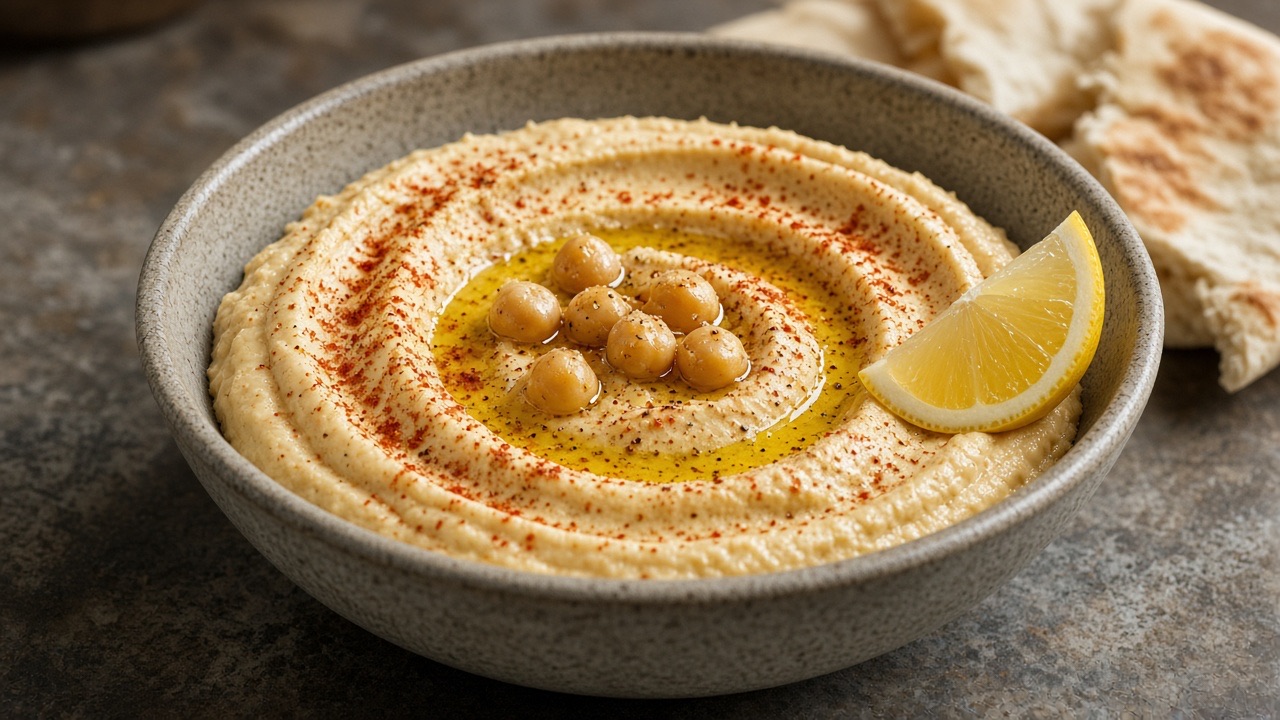
Hummus that is actually smooth
Grainy hummus is almost always one of two things: the tahini never got a chance to emulsify, or the chickpeas went in dry and the blender just chopped them. Blend the tahini with the lemon first. It should look pale and thick, like a sauce, before any chickpea touches it. Then the ice water, added while the machine runs, loosens the puree without making it watery. Cold water whips in better than room-temperature water.
A standard can is about 400 g in the tin and about 240 g once drained. That 240 g is roughly 1 1/2 cups. The canned chickpea chart is the one to use, not the dried-chickpea chart. Dried chickpeas are a different ingredient and a different weight. If you are opening the tin for an "80 g" or "1 can" question, the drained weight is the number that matters in this bowl.
Tahini and garlic
60 g of tahini is about 4 tablespoons once the jar is stirred to the bottom. The paste under the oil is much thicker than the layer on top. An unstirred spoonful makes bitter, oily hummus. The tahini conversion covers a full cup if you are scaling this up for a party. Out of tahini, the tahini substitutes page is honest about what you lose. Sunflower seed butter is closer than peanut butter.
One clove of garlic is enough. Two raw cloves take over the lemon. If you want it louder, add the second clove after you have tasted it.
Hummus keeps four days, covered, in the fridge. It thickens as it sits. Stir in a spoon of water before serving. Olive oil on top is for the table, not for the blender. Oil in the blender makes it heavy.