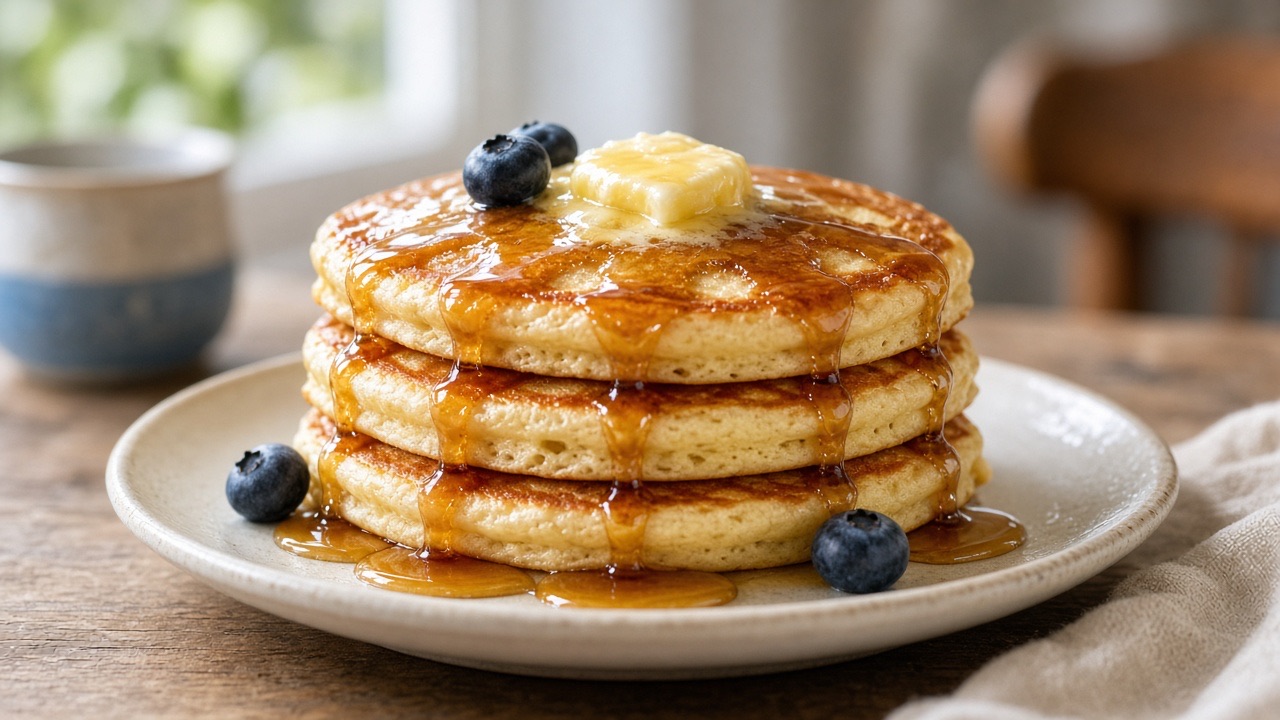
Buttermilk pancakes with a real rise
The soda needs the acid in buttermilk, and the baking powder gives a second lift that does not depend on that acid. Use both. Plain milk and only baking powder makes a thinner, less tender pancake. If you have to swap, follow the ratio on buttermilk substitutes and keep the baking soda. Without acid, the soda tastes soapy.
300 g of buttermilk is about 1 1/4 cups. Weigh it if you can. The buttermilk grams-to-cups page puts one cup at 245 g, so a heaped cup is already too much liquid and the pancakes spread flat.
Batter and the flip
Stir until the flour streaks vanish and stop. Gluten develops fast in a thin batter, and an overmixed pancake is rubbery even when it looks fluffy. Resting five minutes lets the flour hydrate and the powder start working.
Medium heat, not screaming hot. Butter should foam, not brown in ten seconds. Flip when the bubbles on the surface stay open and the edge looks set. Flip earlier and the center is raw. Flip later and the bottom is dark before the middle cooks. The second side needs less time.
190 g flour is about 1 1/2 cups plus a tablespoon, spooned. The flour chart is there if you are converting a family recipe that only lists cups. Leftover batter keeps overnight in the fridge. Stir it once in the morning. It will be thicker, which is fine.