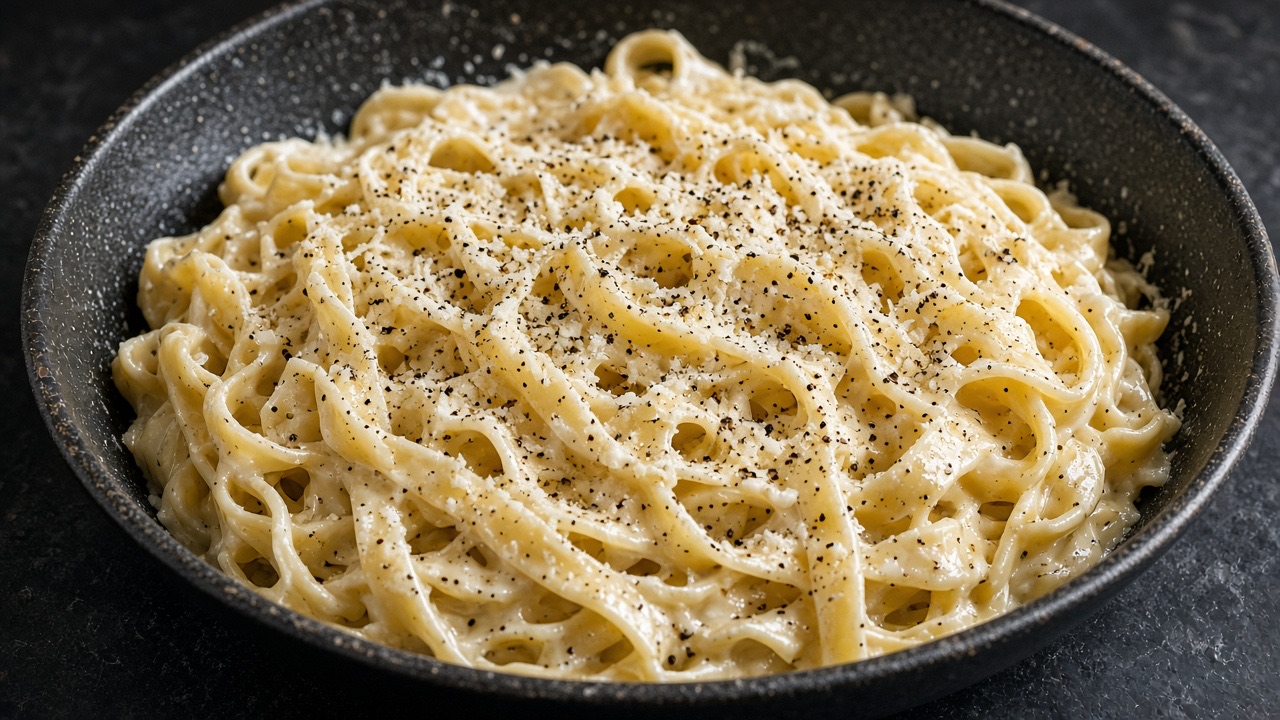
Alfredo that stays a sauce, not a cheese brick
The American plate of fettuccine alfredo is cream, butter, and parmesan. The Roman original is butter and cheese emulsion with pasta water and no cream at all. This is the cream one, written in grams so the sauce does not split or turn into mortar.
238 g of heavy cream is 1 cup. The heavy cream chart is that weight. No heavy cream? The heavy cream substitute changes the body of the sauce, so read the ratio before you pour. UK double cream is richer, about 48 percent fat against 36. The cup weight is almost the same, but 238 g of double cream makes a sauce that sets like glue. Use 180 g of double cream and an extra splash of pasta water. The double cream substitute is the other direction, if the recipe in your hand says double and you have heavy.
Cheese off the heat
Parmesan melted into boiling cream clumps into oily strings. Take the pan off the burner, then stir the cheese in. Grate it fine. Pre-grated parmesan is coated so it does not stick in the bag, and that coating keeps it from melting cleanly.
40 g of butter is about 3 tablespoons. The butter chart covers the stick conversion if you are cutting from a block. Brown butter tastes good in other sauces. Here it fights the cream. Stop when the butter is melted and the garlic smells sweet, which is about 30 seconds.
Pasta water is the looseness
Alfredo tightens in the two minutes between the pan and the table. A dry toss means you needed more pasta water, not more cheese. Start with a spoonful. The starch in that water also helps the cream cling to the noodles.
Undercook the fettuccine by about a minute. It finishes in the sauce. Overcooked noodles go limp and drink the cream until the pan looks dry. Serve it straight away. Reheated alfredo separates. If you must reheat a portion, do it in a pan with a spoon of milk over low heat, and do not expect the original texture.