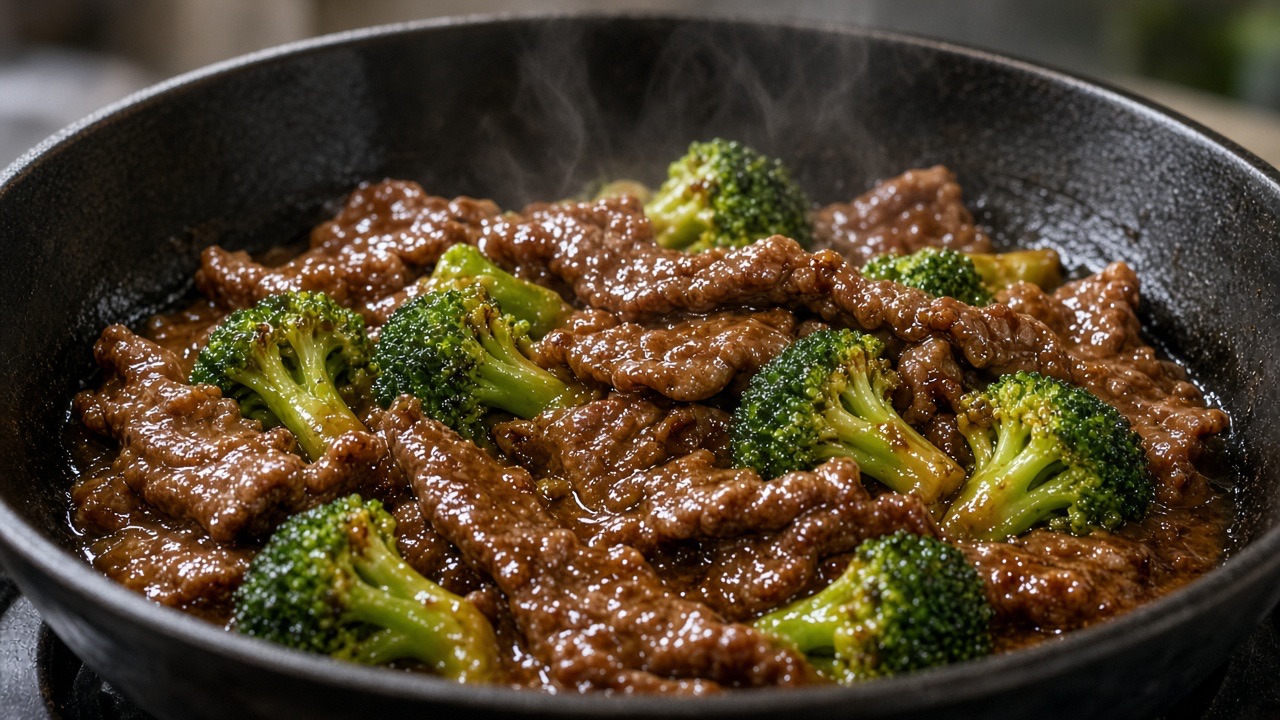
Beef and broccoli that stays tender
Slice the beef thin, against the grain, while it is still cold from the fridge. Warm beef tears instead of slicing. Sirloin or flank both work. A stew chunk will not get tender in four minutes, so do not use that.
The teaspoon of cornstarch on the beef does two things. It helps the surface brown, and it keeps the juices from pouring out the moment the meat hits the pan. One teaspoon is a coat, not a batter. Too much and the beef tastes pasty.
High heat, then the sauce
The pan has to be hot and the beef has to sit in one layer. Crowded beef steams and turns gray. Do it in two batches if the skillet is small. Two minutes is enough. It finishes when it goes back into the sauce.
Broccoli wants a short covered steam so the stems cook, then an uncovered minute so it does not go olive and limp. Cut the florets small. A huge tree is raw in the middle when the edges are done.
The sauce cornstarch has to be mixed with the cold water and soy before it hits the pan. Dry powder into a hot skillet is lumps. Once it goes in, toss for about a minute until the sauce looks clear and glossy and clings to the beef. If it is thin, give it 30 seconds more. If it is a paste, loosen it with a spoon of water.
Out of cornstarch, the cornstarch substitutes page covers flour. Use twice as much flour and cook it a minute longer so the raw taste goes. The cornstarch chart is for scaling, because a teaspoon and a heaped teaspoon are different weights.
Serve over cooked rice, not rice you just boiled and piled wet on the plate. Day-old rice, or rice spread out so the steam leaves, stays separate. A cup of cooked rice is about 158 g on the cooked rice chart.